Is the rare $140,000 1943 copper Lincoln Wheat penny still out there? Learn how to identify, value, and potentially find this elusive coin. Check your pocket change carefully—you might have a hidden treasure!
$140K Lincoln Wheat Penny Mystery
$140K Lincoln Wheat Penny Mystery: Imagine discovering a penny worth $140,000 in your spare change! This is the incredible reality of the rare 1943 copper Lincoln Wheat penny, one of the most sought-after coins in numismatic history. But does this valuable coin still exist in everyday circulation, or has it been locked away in collectors’ vaults? Let’s dive into the details and help you understand how to identify this elusive treasure.
$140K Lincoln Wheat Penny Mystery
The 1943 copper Lincoln Wheat penny is one of the most valuable and intriguing coins in U.S. history. Although extremely rare, there is still hope that a few might remain undiscovered. If you come across a 1943 penny, take the time to check its authenticity—you might be holding a small fortune in your hands!
Topic
Details
Coin
1943 Copper Lincoln Wheat Penny
Minting Error
Accidentally struck in copper instead of steel during WWII
Rarity
Approximately 20 known specimens
Estimated Value
Up to $140,000+ depending on condition
Identification Tips
Non-magnetic, weighs 3.11 grams, unique copper color
During World War II, the U.S. Mint made a critical decision to stop using copper in pennies to support the war effort. In 1943, pennies were supposed to be struck in zinc-coated steel to conserve copper for military use. However, due to a minting error, a few pennies were mistakenly struck on leftover copper planchets from 1942, making them exceptionally rare.
The 1943 copper pennies have become legendary among collectors because of their accidental creation and the mystery surrounding their whereabouts.
Why Is the 1943 Copper Penny Worth So Much?
The 1943 copper penny is valuable for several reasons:
Rarity – Only about 20 authentic coins have been discovered, making them one of the rarest coins in the U.S. Mint’s history.
Historical Significance – The coin represents a pivotal moment in American history during wartime production adjustments.
Collector Demand – Numismatists and investors worldwide seek to add this rarity to their collections, driving up its value.
In 2010, one such penny sold for $1.7 million, making headlines across the world.
Could the $140K Penny Still Be in Circulation?
While the chances are extremely low, it’s not impossible! Manyold coins are still in circulation, especially from estate sales or coin jars passed down through generations. Some unsuspecting individuals might unknowingly spend such coins without realizing their value.
How to Identify a $140K Lincoln Wheat Penny?
Before getting too excited, it’s important to check if your 1943 penny is authentic. Follow these steps to identify it:
1. Check the Date and Mint Mark
Ensure the year on the penny reads “1943” (no extra markings or alterations).
Mint marks to look for: D (Denver), S (San Francisco), and no mint mark (Philadelphia).
2. Use the Magnet Test
A genuine copper penny is non-magnetic, whereas steel pennies from 1943 will stick to a magnet.
If your penny sticks to the magnet, it’s not the rare copper version.
3. Weigh the Coin
A real copper penny weighs 3.11 grams, while the steel version weighs 2.7 grams.
Use a precision digital scale to check the weight.
4. Look for Counterfeits
Many fake 1943 copper pennies exist. Some are plated steel coins or altered versions of the 1948 penny (with the “8” reshaped to look like a “3”).
Always have your coin verified by a professional grading service such as PCGS.
Famous Discoveries of the 1943 Copper Penny
Some of the most famous discoveries of this penny include:
In 1947, a schoolboy in California found a 1943 copper penny in his lunch money and later sold it for thousands of dollars.
In 1958, a woman discovered a 1943 copper penny in her husband’s coin collection.
In 2019, a man sold his long-forgotten 1943 penny for $204,000 at an auction.
Value of the 1943 Copper Penny by Condition
The value of a 1943 copper penny depends on its condition (grade):
Condition
Estimated Value
Good (circulated)
$60,000 – $85,000
Fine
$100,000 – $140,000
Uncirculated (Mint State)
$200,000+
Proof or Extremely Rare Specimens
$1 million+
How to Sell a 1943 Copper Penny
If you believe you have a genuine 1943 copper penny, follow these steps to sell it for the best value:
Get Professional Authentication – Use services like PCGS or NGC to certify the coin’s authenticity.
Contact Reputable Coin Dealers – Consult established dealers or auction houses like Heritage Auctions or Stack’s Bowers.
Avoid Pawn Shops – Selling through reputable coin collectors yields the highest returns compared to general pawn shops.
Consider Online Auctions – Websites such as eBay, but ensure you have verification to assure buyers.
The RRB NTPC Admit Card 2025 will be released 4 days before the exam date. Candidates can download it from their regional RRB website. This article provides direct download links, exam dates, syllabus, and preparation tips to help you succeed in the RRB NTPC Exam 2025.
RRB NTPC Admit Card 2025 Date
RRB NTPC Admit Card 2025: The Railway Recruitment Board (RRB) will soon release the RRB NTPC Admit Card 2025 for candidates appearing in the Non-Technical Popular Categories (NTPC) recruitment exam. With over 11,558 vacancies, this exam is a golden opportunity for aspirants looking to join the Indian Railways in non-technical roles. The admit card is a crucial document for all candidates, as it grants them entry to the examination hall. In this article, we will cover how to download the RRB NTPC Admit Card 2025, exam dates, eligibility criteria, syllabus, and preparation tips to help candidates succeed.
RRB NTPC Admit Card 2025
The RRB NTPC Admit Card 2025 is a crucial document for all candidates appearing in the exam. By staying updated with exam dates, syllabus, and preparation tips, candidates can enhance their chances of securing a railway job. Ensure you download your admit card on time, follow the exam instructions, and prepare well.
Although the exact RRB NTPC 2025 exam date has not yet been announced, tentative dates suggest March-April 2025. RRB will soon confirm the official schedule.
Candidates should regularly check their regional RRB websites for updates.
How to Download RRB NTPC Admit Card 2025?
Candidates can download their RRB NTPC Hall Ticket 2025 by following these simple steps:
Visit Your Regional RRB Website
Example: If you applied from Mumbai, go to rrbmumbai.gov.in.
Click on the ‘Admit Card’ Link
Look for the “RRB NTPC Admit Card 2025” section.
Enter Your Login Credentials
Registration Number
Date of Birth (DOB)
Download & Print the Admit Card
Ensure all details (name, roll number, exam date, center, etc.) are correct.
Important: The admit card will be available 4 days before the exam date.
RRB NTPC Exam Pattern & Syllabus
Exam Pattern (CBT-1 & CBT-2)
Subject
CBT-1 Questions
CBT-2 Questions
Marks (Each Stage)
Time Duration
Mathematics
30
35
30/35
90 mins
General Intelligence & Reasoning
30
35
30/35
90 mins
General Awareness
40
50
40/50
90 mins
Negative Marking: 1/3rd mark deduction for each wrong answer.
Skill Tests: Required for Typist & Accounts Clerk roles.
Syllabus Breakdown
Mathematics: Number System, Algebra, Geometry, Trigonometry, Profit & Loss.
General Intelligence & Reasoning: Analogies, Series, Coding-Decoding, Decision Making.
General Awareness: Current Affairs, Indian Railways, Science & Technology.
Documents Required at the Exam Center
To avoid any last-minute confusion, carry the following:
Printed Admit Card
Valid Photo ID (Aadhar, Voter ID, Passport, etc.)
Passport-Size Photographs (same as used in the application)
Prohibited Items: Electronic devices, notes, calculators, and mobile phones.
How to Prepare for RRB NTPC 2025?
Study Plan & Tips
Start Early – Cover the syllabus thoroughly.
Use RRB NTPC Books – Follow books like Lucent GK, R.S. Aggarwal’s Quantitative Aptitude.
The Australian government has announced an $841 increase to the Age Pension for 2025, with pensioners receiving $21 extra per fortnight. Learn about the full payment schedule, eligibility criteria, and how to apply for this benefit.
$841 Age Pension Increase and $21 Bonus for 2025: Starting January 1, 2025, the Australian government will introduce an $841 increase to the Age Pension, which translates to an additional $21 per fortnight for eligible recipients. This adjustment is part of the government’s effort to help pensioners keep up with rising living costs due to inflation. The increase will benefit millions of older Australians who rely on the Age Pension as their primary source of income. This article will cover the full payment schedule, eligibility criteria, how to apply, and what additional benefits pensioners can expect.
$841 Age Pension Increase and $21 Bonus for 2025
The $841 Age Pension increase in 2025 offers vital financial relief to older Australians, ensuring they can keep up with rising living expenses. With the additional $21 fortnightly increase, pensioners can expect a boost to their income without needing to reapply. To check eligibility and apply, visit the official Services Australia – Age Pension page.
The Age Pension is a government-provided financial benefit aimed at supporting Australians aged 67 years and over who meet residency, income, and asset criteria. It ensures older citizens have access to a basic standard of living in their retirement years.
The pension is reviewed and adjusted twice a year (in March and September) based on inflation and cost-of-living increases.
Breakdown of the New Age Pension Rates for 2025
From January 1, 2025, the updated Age Pension rates will be:
For Singles:
Previous Rate: $1,116.30 per fortnight
New Rate: $1,144.40 per fortnight
Increase: $28.10 per fortnight (Annual increase: $841)
For Couples (Combined):
Previous Rate: $1,682.80 per fortnight
New Rate: $1,725.20 per fortnight
Increase: $42.40 per fortnight (Annual increase: $1,102.40)
The new rates include the basic pension amount, pension supplement, and energysupplement, ensuring pensioners receive the maximum entitlement possible.
Eligibility Criteria for the Age Pension in 2025
To qualify for the Age Pension, individuals must meet the following requirements:
1. Age Requirement
Must be 67 years or older (as of 2025).
2. Residency Status
Must be an Australian citizen or permanent resident.
Must have lived in Australia for at least 10 years, including a continuous 5-year period.
3. Income Test
The pension is subject to an income test, which limits how much you can earn before your payments are reduced. The new thresholds for 2025 are:
Singles:
Can earn up to $204 per fortnight before the pension is reduced.
For every $1 earned above the threshold, the pension is reduced by 50 cents.
Couples (combined):
Can earn up to $360 per fortnight before reductions apply.
4. Assets Test
The total value of assets (excluding your primary home) must be below the following thresholds:
Single homeowner: Up to $301,750
Couple homeowners: Up to $451,500
Single non-homeowner: Up to $543,750
Couple non-homeowners: Up to $693,500
If your income or assets exceed the limits, your pension payment will be reduced or may not be available.
How to Apply for the $841 Age Pension Increase and $21 Bonus for 2025?
Eligible individuals can apply for the Age Pension through the following methods:
1. Online Application
Visit myGov and link your Centrelink account.
Complete the Age Pension application form online.
2. By Phone
Call 13 23 00 to apply via phone assistance.
3. In-Person Application
Visit your nearest Services Australia service center with the required documents.
Documents Required:
Proof of identity (passport, driver’s license)
Income and assets statements
Residential details
Additional Benefits for Pensioners in 2025
Apart from the pension increase, recipients may also be eligible for additional government assistance, including:
1. Energy Supplement
Helps pensioners cover rising energy costs.
2. Commonwealth Seniors Health Card
Discounts on prescriptions, medical services, and transport.
3. Rent Assistance
If renting privately, pensioners may qualify for additional rent support.
4. Discounted Public Transport
Pensioners can receive reduced fares for public transportation.
5. The One-Time $21 Cost-of-Living Bonus
A special one-time bonus will be included in the first payment of 2025.
Full Payment Schedule for 2025
Age Pension payments are made fortnightly, and the schedule for the first quarter of 2025 is as follows:
Payment Date
Fortnightly Amount (Single)
Couple (Combined)
January 3, 2025
$1,144.40
$1,725.20
January 17, 2025
$1,144.40
$1,725.20
January 31, 2025
$1,144.40
$1,725.20
February 14, 2025
$1,144.40
$1,725.20
February 28, 2025
$1,144.40
$1,725.20
Payments are automatically deposited into the recipient’s nominated bank account.
Frequently Asked Questions (FAQs)
Q1: Do I need to reapply for the Age Pension to receive the increased amount? No, if you are already receiving the Age Pension, the increase will be applied automatically.
Q2: When will I receive the first increased payment? The new rates take effect from January 1, 2025, and will be reflected in the first fortnightly payment of the year.
Q3: What happens if I exceed the income or asset thresholds? If your income or assets exceed the limits, your pension payments may be reduced or stopped entirely.
Q4: Will there be further pension increases in 2025? Yes, pension rates are reviewed twice a year, with the next adjustment expected in March 2025.
Q5: Can I work while receiving the Age Pension? Yes, but any earnings above the threshold will reduce your pension amount.
New Tata Harrier : Tata Motors is set to make waves in the Indian automotive market with the launch of the highly anticipated new Tata Harrier.
This revamped version of the popular SUV promises to deliver a fresh look, enhanced luxury features, and cutting-edge technology, solidifying its position as a formidable contender in the premium SUV segment.
New Tata Harrier Design Evolution: A Bold New Avatar
The new Tata Harrier showcases a significant design overhaul that builds upon its already striking appearance.
While retaining the iconic silhouette that made it a head-turner on Indian roads, the updated Harrier boasts several key design enhancements:
Revised Front Fascia: The Harrier now features a more prominent grille with a distinctive honeycomb pattern, giving it a bolder and more assertive presence on the road.
LED Lighting: The SUV comes equipped with sleek LED headlamps and taillights, featuring a unique pixelated graphic design that not only enhances visibility but also adds a futuristic touch to its overall aesthetics.
Aerodynamic Enhancements: The new Harrier incorporates active air flaps (AAF) in its design, improving aerodynamics and contributing to better energy efficiency.
Alloy Wheels: The SUV rides on stylish R17 aero alloy wheels, which are not only visually appealing but also designed for low rolling resistance, further boosting efficiency.
Color Options: Tata offers a range of vibrant color choices for the new Harrier, including the option for dual-tone schemes that add a touch of personalization.
Stealth Edition: For those seeking a more dramatic look, Tata introduces a Stealth Edition variant featuring a matte black exterior paint scheme, dual-tone alloys, and an all-black interior.
New Tata Harrier Luxurious Interior: Where Comfort Meets Technology
Step inside the new Tata Harrier, and you’re greeted by a cabin that exudes luxury and sophistication. The interior has undergone a significant upgrade, focusing on premium materials, advanced technology, and enhanced comfort:
Premium Color Scheme: The cabin features a sophisticated Granite Gray with Dark Navy color theme, complemented by soothing ocean blue ambient lighting that creates a serene atmosphere.
Floating Console Design: The redesigned center console not only enhances the sense of spaciousness but also provides smart storage solutions for added practicality.
Digital Cockpit: The Harrier now boasts a fully digital instrument cluster, providing clear and customizable information to the driver.
Infotainment System: A large 12.3-inch touchscreen infotainment system takes center stage, offering seamless connectivity and intuitive controls.
Additional Displays: In a segment-first move, the Harrier features an additional screen for the front passenger, enhancing the overall tech-forward ambiance of the cabin.
Premium Audio: A BOSE premium 8-speaker system ensures an immersive audio experience for all occupants.
Climate Control: The SUV comes equipped with dual-zone automatic climate control, including a driver-only mode for improved efficiency.
Seating Comfort: The front row offers ventilated and powered seats, ensuring optimal comfort even on long journeys.
New Tata Harrier Advanced Features and Technology
The new Tata Harrier is packed with a host of advanced features that set it apart in its segment:
Connected Car Technology: The SUV comes with Tata’s latest connected car suite, offering features like remote vehicle monitoring, geofencing, and over-the-air (OTA) updates.
Vehicle-to-Load (V2L) and Vehicle-to-Vehicle (V2V) Charging: These innovative features allow the Harrier to power external devices and even charge other electric vehicles, adding a new dimension of utility.
Advanced Driver Assistance Systems (ADAS): The Harrier incorporates Level 2 ADAS features, including Lane Keeping Assist, Forward Collision Warning, and Smart Cruise Control with stop-and-go functionality.
360-degree Camera System: This feature aids in parking and maneuvering in tight spaces, enhancing overall safety and convenience.
Terrain Modes: The SUV offers multiple drive modes optimized for various terrains, enhancing its versatility and off-road capabilities.
Summon Feature: Demonstrated at recent auto shows, this feature allows the vehicle to be remotely maneuvered without a driver, showcasing Tata’s commitment to cutting-edge technology.
New Tata Harrier Powertrains: Performance Meets Efficiency
The new Tata Harrier offers a range of powertrain options to cater to diverse customer preferences:
Electric Variant: The highlight of the lineup is the all-new Harrier EV, which is expected to offer a range of up to 500 km on a single charge. It will be available in both single-motor (front-wheel drive) and dual-motor (all-wheel drive) configurations.
Conventional Powertrains: While specific details are yet to be confirmed, the Harrier is likely to continue offering refined and powerful petrol and diesel engine options, building upon the strengths of its predecessor.
New Tata Harrier Safety: A Top Priority
Tata Motors has always prioritized safety, and the new Harrier is no exception. Key safety features include:
Robust Construction: The SUV is built with approximately 75% Advanced High Strength Steel (AHSS) and High Strength Steel (HSS), ensuring excellent structural integrity.
Comprehensive Airbag System: Six airbags come as standard across all variants.
Electronic Stability Control (ESC): This feature enhances vehicle stability in challenging driving conditions.
Hill Start Assist and Hill Descent Control: These features provide added confidence during off-road excursions.
ISOFIX Child Seat Anchors: Ensuring the safety of younger passengers.
Advanced Braking System: The Harrier comes equipped with disc brakes on all four wheels, coupled with ABS and EBD for optimal braking performance.
New Tata Harrier Market Positioning and Launch Timeline
The new Tata Harrier is positioned as a premium offering in the mid-size SUV segment.
While official pricing has not been announced, industry experts speculate that it will be competitively priced, with the base variant starting around ₹15 lakh and the top-end models, including the EV variant, potentially reaching up to ₹25 lakh (ex-showroom).
The launch of the new Tata Harrier is expected to take place in phases, with the conventional powertrain models likely to hit the market first, followed by the much-anticipated EV variant.
The electric version is slated for launch by March 2025, as per recent announcements from Tata Motors.
New Tata Harrier Conclusion: A New Benchmark in the SUV Segment
The new Tata Harrier represents a significant leap forward in terms of design, technology, and overall appeal.
By combining a fresh, modern look with advanced features and a range of powertrain options, including an all-electric variant, Tata Motors has created a vehicle that’s poised to set new benchmarks in the highly competitive SUV segment.
As the automotive industry continues to evolve, with a growing focus on electrification and sustainable mobility, the new Harrier demonstrates Tata’s commitment to staying at the forefront of innovation.
With its blend of style, performance, and cutting-edge technology, the new Tata Harrier is not just an upgrade of a popular model; it’s a bold statement of Tata Motors’ vision for the future of SUVs in India and beyond.
As we await its official launch, the new Tata Harrier stands as a testament to the rapid advancements in the Indian automotive industry, promising to offer consumers a world-class product that combines global standards with a deep understanding of local preferences and conditions.
Whether you’re an urban dweller looking for a stylish and tech-laden SUV or an adventure enthusiast seeking a capable and comfortable vehicle for long journeys, the new Tata Harrier seems poised to exceed expectations and redefine the SUV experience for Indian consumers.
Yamaha RX 100 : In a move that has set the motorcycle world abuzz, Yamaha is poised to rewrite history with the much-anticipated relaunch of its iconic RX 100.
This legendary two-wheeler, which once ruled the hearts and roads of India, is making a comeback that promises to blend nostalgia with cutting-edge technology.
As we stand on the cusp of this exciting development, let’s delve into what makes the RX 100’s return so significant and what riders can expect from this modern incarnation of a classic.
Yamaha RX 100 A Trip Down Memory Lane
The Yamaha RX 100 first roared onto Indian roads in 1985, quickly becoming a cultural phenomenon. Its lightweight design, peppy performance, and distinctive two-stroke engine note made it an instant favorite among riders of all ages.
For over a decade, the RX 100 dominated the Indian motorcycle scene, earning a reputation for its quick acceleration, reliability, and the sheer joy it brought to its riders.
However, the tale of the RX 100 seemed to have ended in 1996 when stricter emission norms forced the discontinuation of two-stroke engines.
Yet, like all great legends, the RX 100 refused to fade into obscurity. The enduring popularity of well-maintained RX 100s in the used market and the thriving modification scene around this model have been a testament to its timeless appeal.
Yamaha RX 100 The Resurrection of a Legend
Fast forward to 2025, and Yamaha is set to capitalize on this enduring love affair by bringing back the RX 100 in a modern avatar.
Set to launch in January 2025, this reimagined classic is designed to captivate both long-time enthusiasts and a new generation of riders.
Yamaha RX 100 Engine and Performance
At the heart of the new RX 100 is expected to be a 98cc, air-cooled engine. This time, however, it will be a four-stroke unit to comply with current emission norms.
Despite the shift from the original two-stroke engine, Yamaha’s engineers have worked tirelessly to ensure that the new powerplant delivers a riding experience that echoes the sprightly nature of its predecessor.
Early reports suggest that the engine will produce around 10-12 horsepower, which, combined with the bike’s lightweight construction, should provide the nippy acceleration that the RX 100 was famous for.
Fuel efficiency is expected to be impressive, with estimates ranging from 60-70 km/l under standard riding conditions.
Yamaha RX 100 Design and Aesthetics
Yamaha has taken on the challenging task of reimagining the RX 100’s design for the modern era while staying true to its iconic roots. The new model is expected to feature:
A sleek, retro-inspired fuel tank reminiscent of the original
Round headlamp with LED technology
Classic-style indicators and taillight
Slim, comfortable seat design
Chrome-finished exhaust and other accents for a premium look
The overall silhouette aims to capture the essence of the original RX 100 while incorporating modern design elements that appeal to contemporary tastes.
Yamaha RX 100 Technology and Features
While the original RX 100 was known for its simplicity, the 2025 model is set to incorporate a host of modern features:
Digital-analog hybrid instrument cluster
USB charging port
ABS (Anti-lock Braking System)
Disc brake in the front for improved stopping power
Tubeless tires for enhanced safety and convenience
Electric start (with kick-start option for the purists)
These additions aim to make the new RX 100 not just a nostalgic ride but a practical daily commuter that meets the expectations of modern riders.
Yamaha RX 100 Market Positioning and Price
Yamaha is positioning the new RX 100 as a premium offering in the 100cc segment. With an expected price range of ₹1,40,000 to ₹1,50,000, it will be competing with established players in the 125-150cc segment.
This pricing strategy reflects the bike’s heritage status and the inclusion of modern features and technology.
The higher price point might raise eyebrows, but Yamaha is banking on the model’s iconic status and the emotional connection it holds with Indian riders to carve out a niche for itself.
The company believes that the combination of nostalgia, modern engineering, and the Yamaha brand name will justify the premium pricing.
Target Audience
The new RX 100 is expected to appeal to a diverse range of riders:
Nostalgic riders who owned or admired the original RX 100
Young enthusiasts looking for a stylish, retro-modern motorcycle
Collectors who appreciate iconic vehicles
Daily commuters seeking a reliable, fuel-efficient, yet exciting ride
Yamaha’s marketing strategy is likely to focus on the bike’s heritage while highlighting its modern capabilities, aiming to bridge the gap between different generations of riders.
Yamaha RX 100 Challenges and Expectations
The revival of the RX 100 is not without its challenges. Yamaha’s engineers face the daunting task of recreating the magic of the original RX100 while adhering to modern emission norms and safety standards.
The two-stroke engine, which was central to the RX100’s character, is no longer viable in today’s regulatory environment.
Another significant challenge is meeting the sky-high expectations of RX 100 enthusiasts. The original model has achieved near-mythical status over the years, and living up to this legacy with a modern interpretation is no small feat.
However, early feedback from industry insiders and test riders has been overwhelmingly positive. Many report that while the new RX 100 doesn’t replicate the exact feel of the two-stroke original, it captures the essence of what made the RX 100 special – lightweight agility, peppy performance, and an engaging riding experience.
Yamaha RX 100 Impact on the Indian Motorcycle Market
The launch of the new RX100 is expected to shake up the Indian motorcycle market. While it doesn’t fit neatly into existing categories, industry experts predict that it could impact sales across multiple segments:
In the 100-125cc commuter segment, the RX100 could appeal to riders looking for a premium, lifestyle-oriented option.
Its higher price point and heritage status might also see it competing with entry-level models from Royal Enfield and Jawa, brands that have successfully tapped into the retro-modern motorcycle trend.
The RX100’s return could spark a renewed interest in classic motorcycles, potentially influencing other manufacturers to revisit their own iconic models from the past.
Yamaha RX 100 The Bigger Picture: Nostalgia as a Market Force
The relaunch of the RX 100 is more than just a new product introduction; it’s a testament to the power of nostalgia in the automotive industry.
In recent years, we’ve seen several manufacturers successfully revive classic models, from the Jawa motorcycles to the Volkswagen Beetle (albeit now discontinued).
This trend reflects a broader consumer desire for products that offer an emotional connection along with modern functionality.
The RX 100’s relaunch is Yamaha’s bid to tap into this sentiment, offering a product that resonates with memories while meeting contemporary standards of performance and safety.
Looking Ahead: The Future of the RX 100
As exciting as the relaunch is, the true test for the new RX 100 will come after its introduction to the market. Its success could pave the way for more heritage revivals from Yamaha and other manufacturers.
Models like the RD350, another cult classic from Yamaha’s stable, might see a modern interpretation if the RX100 proves successful.
For Yamaha, the RX 100 represents more than just a new product launch. It’s a bold statement of intent, a bridge between their storied past and a future where classic design and modern technology coexist harmoniously.
The new RX 100 has the potential to redefine the retro-modern motorcycle segment in India, setting new benchmarks for performance, style, and emotional appeal.
Yamaha RX 100 Conclusion: A New Chapter in a Legendary Tale
As we count down to the January 2025 launch, the anticipation for the new Yamaha RX 100 continues to build.
Motorcycle enthusiasts across India are eagerly awaiting more details about the bike, with many already planning to add this piece of reborn history to their garages.
Whether it will live up to its predecessor’s legendary status remains to be seen, but one thing is certain – the RX 100’s comeback is set to be one of the most exciting chapters in India’s rich motorcycling history.
For riders who have fond memories of the original RX 100 and for a new generation eager to experience a piece of motorcycling history, the wait is almost over.
As the automotive landscape evolves, with an increasing focus on electric mobility and advanced technologies, the RX 100’s revival serves as a reminder of the enduring appeal of classic design and simple, engaging motorcycles. It’s a testament to the power of nostalgia, but also to Yamaha’s ability to adapt and innovate.
The new RX 100 isn’t just a motorcycle; it’s a time machine on two wheels, ready to transport riders back to the golden age of Indian motorcycling while firmly planted in the present.
It’s a bold experiment in blending heritage with modernity, and its success could shape the future of motorcycle design and marketing in India and beyond.
As the launch date approaches, the motorcycle community holds its collective breath, waiting to see if Yamaha can truly capture lightning in a bottle twice.
Will the new RX 100 live up to the legend? Only time will tell, but one thing is certain: the return of this iconic model has already reignited the passion and excitement that made the original RX 100 a true legend of Indian motorcycling.
Maruti Wagon R 2025 : As we approach 2025, the automotive landscape in India is buzzing with anticipation for the next generation of one of the country’s most beloved hatchbacks – the Maruti Wagon R.
Set to redefine the segment it has dominated for over two decades, the 2025 Wagon R promises to blend Maruti Suzuki’s legacy of reliability with cutting-edge technology and design. Let’s delve into what we can expect from this eagerly awaited model.
Maruti Wagon R 2025 A Legacy of Success
Before we look to the future, it’s worth reflecting on the Wagon R’s illustrious past. Since its introduction to the Indian market in 1999, the Wagon R has sold over 32 lakh units, becoming a household name and a symbol of practical, affordable mobility.
Its distinctive tall-boy design, spacious interior, and fuel efficiency have made it a favorite among families and first-time car buyers alike.
Design Evolution: A Fresh Take on a Classic
The 2025 Wagon R is expected to undergo a significant design overhaul while retaining its iconic silhouette. Early rumors and speculative renderings suggest:
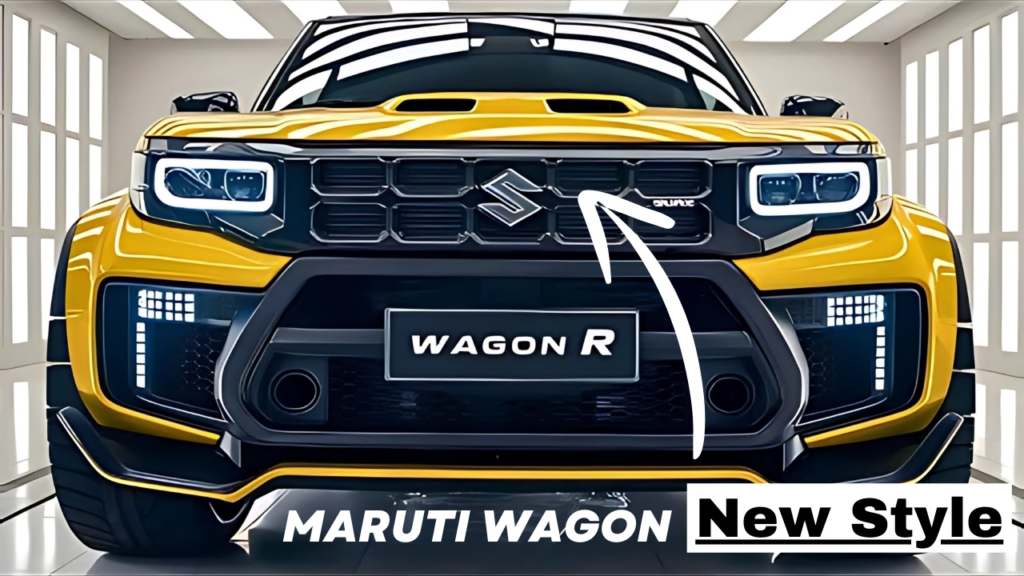
A more assertive front fascia with a larger grille and sleeker LED headlamps
Sculpted body panels to reduce the boxy appearance without compromising interior space
Redesigned taillights, possibly with an LED light bar for a more premium look
New alloy wheel designs, potentially up to 15 inches in diameter
A floating roof design with blacked-out pillars, adding a touch of modernity
While these changes aim to give the Wagon R a more contemporary appearance, Maruti Suzuki is likely to maintain the car’s fundamental DNA – practicality and ease of use in urban environments.
Maruti Wagon R 2025 Spacious Interior with a Tech Upgrade
The interior of the 2025 Wagon R is where we’re likely to see the most significant changes:
A completely redesigned dashboard with soft-touch materials
A larger, potentially 9-inch touchscreen infotainment system with wireless Apple CarPlay and Android Auto
A digital instrument cluster, at least in higher trims
Improved seat comfort with better bolstering and premium upholstery options
Enhanced storage solutions, building on the current model’s practical layout
Possible inclusion of a sunroof in top-spec variants, a first for the Wagon R
Despite these upgrades, the new Wagon R is expected to maintain its class-leading headroom and legroom, features that have been crucial to its success.
Maruti Wagon R 2025 Powertrain Options: Embracing Hybridization
One of the most exciting rumors surrounding the 2025 Wagon R is the potential introduction of a full hybrid powertrain. This would be a game-changer in the segment, offering unparalleled fuel efficiency. The powertrain lineup might include:
A 1.2-liter Dualjet petrol engine with mild-hybrid technology, carried over from the current model but further refined for better efficiency
A new full hybrid system, possibly using a 1.2-liter three-cylinder engine coupled with an electric motor
The tried-and-tested 1.0-liter K10C engine for entry-level variants
A factory-fitted CNG option, catering to the growing demand for alternative fuels
Transmission options are likely to include a 5-speed manual and an improved AMT (Automated Manual Transmission). There’s also speculation about the introduction of a CVT option for the hybrid variant, which would be a first in this segment.
Maruti Wagon R 2025 Fuel Efficiency: Setting New Benchmarks
Fuel efficiency has always been a strong suit for the Wagon R, and the 2025 model is expected to raise the bar even higher:
The mild-hybrid variants could potentially deliver up to 25-27 km/l
The full hybrid system, if introduced, might push the efficiency to an impressive 30-35 km/l
CNG variants could offer a mileage of around 35-40 km/kg
These figures would not only make the Wagon R one of the most fuel-efficient cars in its segment but also significantly reduce the overall cost of ownership.
Maruti Wagon R 2025 Safety Features: A Top Priority
With increasing awareness and stricter regulations, safety is expected to be a key focus area for the 2025 Wagon R:
Six airbags as standard across all variants
Electronic Stability Control (ESC) and Hill Hold Assist
ISOFIX child seat anchors
360-degree camera system in top-spec variants
Tire Pressure Monitoring System (TPMS)
Improved structural rigidity for better crash protection
These enhancements would address one of the few criticisms of the current model and bring the Wagon R in line with global safety standards.
Maruti Wagon R 2025 Advanced Features: Punching Above Its Weight
To appeal to tech-savvy buyers, the 2025 Wagon R is rumored to offer features typically found in more premium segments:
Wireless smartphone charging
Connected car technology with remote engine start and climate control
Voice-activated commands for various functions
Automatic climate control with rear AC vents
Keyless entry with push-button start across all variants
Cruise control for highway driving comfort
These additions would significantly enhance the Wagon R’s value proposition, making it an even more attractive option in the competitive hatchback segment.
Maruti Wagon R 2025 Pricing Strategy: Maintaining Affordability
Despite the numerous upgrades, Maruti Suzuki is likely to keep the pricing competitive. Industry experts speculate a starting price of around ₹5.5 lakh for the base variant, going up to ₹8.5 lakh for the top-spec hybrid model (ex-showroom prices).
This pricing strategy would position the Wagon R as an excellent value-for-money proposition, especially considering the advanced features and potential fuel savings.
Maruti Wagon R 2025 Production and Availability
The 2025 Wagon R is expected to be manufactured at Maruti Suzuki’s state-of-the-art facilities in India, ensuring high quality and easy availability of spare parts. The company’s vast dealership network across the country will facilitate quick deliveries and after-sales service.
Maruti Wagon R 2025 Market Impact and Competition
The launch of the 2025 Wagon R is likely to shake up the compact hatchback segment. Its combination of space, efficiency, and advanced features will pose a significant challenge to competitors like the Hyundai Grand i10 Nios, Tata Tiago, and even some compact SUVs in the similar price range.
The potential introduction of a full hybrid system could also influence other manufacturers to accelerate their electrification plans for the Indian market, potentially leading to a wider adoption of hybrid technology in affordable cars.
Maruti Wagon R 2025 Environmental Considerations
With its focus on fuel efficiency and the potential introduction of a full hybrid system, the 2025 Wagon R aligns well with India’s push towards cleaner mobility solutions.
The car is expected to meet and exceed the upcoming emission norms, contributing to reduced carbon emissions in urban areas.
Maruti Wagon R 2025 Conclusion: A New Chapter in Affordable Mobility
The 2025 Maruti Wagon R represents more than just a new model launch; it symbolizes the evolution of affordable mobility in India.
By combining its legacy of practicality and reliability with cutting-edge technology and design, Maruti Suzuki is set to redefine expectations in the compact hatchback segment.
As we eagerly await its official unveiling, one thing is clear – the 2025 Wagon R is poised to continue its predecessor’s legacy of success, offering Indian consumers an unbeatable package of style, efficiency, and value.
In a market where every rupee counts, the new Wagon R promises to deliver more bang for the buck than ever before, ensuring its place in Indian hearts and driveways for years to come.
The automotive landscape is changing rapidly, and with the 2025 Wagon R, Maruti Suzuki is not just keeping pace – it’s setting the tempo for affordable innovation in India.
In the vast landscape of Indian automobiles, few vehicles have achieved the iconic status of the Mahindra Bolero.
For decades, this rugged, no-nonsense SUV has been a familiar sight on Indian roads, from bustling city streets to remote rural paths.
Now, Mahindra has unveiled a new iteration of this beloved vehicle, promising to blend the Bolero’s legendary toughness with modern amenities and enhanced performance.
Let’s delve into what makes the new Mahindra Bolero a worthy successor to its storied nameplate.
A Design That Honors Tradition While Embracing Modernity
At first glance, the new Bolero is instantly recognizable. Mahindra’s designers have wisely chosen to retain the boxy, utilitarian silhouette that has been the Bolero’s signature for years.
This isn’t just about nostalgia; the shape is functional, maximizing interior space and maintaining the vehicle’s go-anywhere capability.
However, a closer look reveals subtle but significant updates that bring the Bolero firmly into the present day.
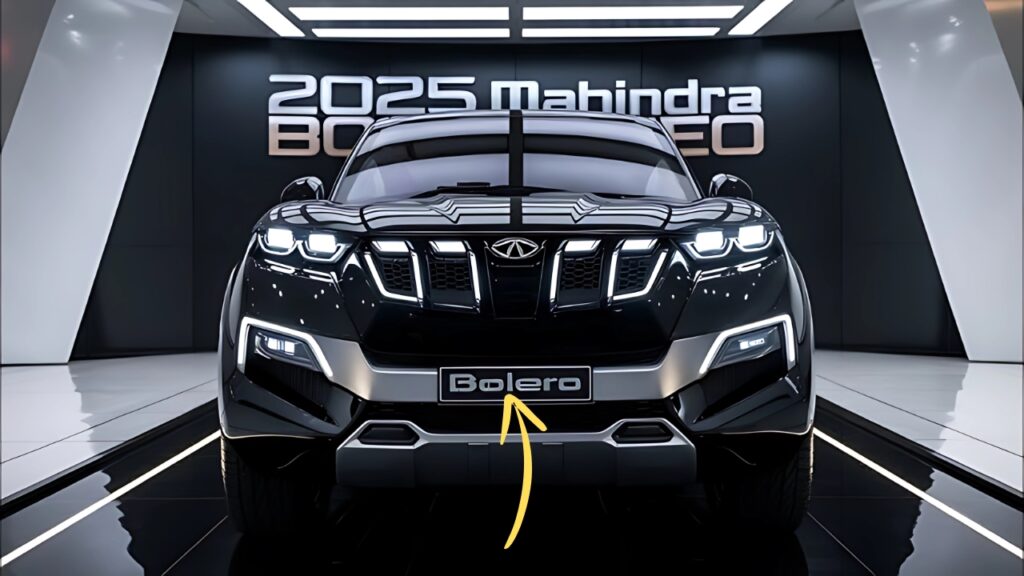
The front fascia has been refreshed with a more prominent grille, featuring bold vertical slats that enhance the vehicle’s commanding presence.
The headlights, while retaining their rectangular shape, now incorporate LED daytime running lights, adding a touch of sophistication to the rugged design.
The bumpers have been redesigned to improve both form and function. They’re now more integrated into the overall design, with the front bumper featuring a subtle skid plate that hints at the Bolero’s off-road prowess.
Along the sides, new character lines break up the slab-sided look of its predecessor, adding a hint of dynamism to the design.
At the rear, the changes are more subtle. The tailgate-mounted spare wheel, a Bolero trademark, remains, but it’s now housed in a redesigned cover that better integrates with the vehicle’s overall aesthetic.
The taillights have been updated with LED elements, improving visibility and adding a modern touch.
Perhaps the most significant exterior update is the range of new colors offered. While the classic Mahindra red and white options remain, the palette has been expanded to include more contemporary choices like a deep forest green and a sleek graphite grey, allowing buyers to personalize their Bolero to their tastes.
An Interior That Combines Comfort with Practicality
Step inside the new Bolero, and you’re greeted by an interior that’s a far cry from the utilitarian cabins of old.
The dashboard has been completely redesigned, featuring a more modern layout that puts all controls within easy reach of the driver.
The centerpiece is a new 7-inch touchscreen infotainment system, a clear nod to the expectations of today’s buyers.
The materials used throughout the cabin strike a careful balance between durability and comfort. Hard-wearing fabrics and plastics ensure that the interior can stand up to the rigors of daily use, whether it’s ferrying the family or serving as a workhorse for a small business.
At the same time, soft-touch materials in key areas add a touch of luxury that was absent in previous models.
Seating comfort has been significantly improved. The front seats offer better support and a wider range of adjustments, making it easier for drivers of all sizes to find their ideal position.
In the rear, the bench seat has been redesigned to offer better thigh support and more legroom, addressing one of the key criticisms of the older model.
One of the Bolero’s strengths has always been its practicality, and the new model builds on this.
There are numerous storage compartments scattered throughout the cabin, including a large glovebox, door pockets, and a center console bin.
The rear cargo area is spacious and easily accessible, with a low loading lip that makes it easy to load heavy or bulky items.
Powertrains: Balancing Performance and Efficiency
Under the hood, the new Bolero offers a choice of powertrains that cater to different needs and preferences. The base model comes equipped with Mahindra’s tried-and-tested 1.5-liter mHawk75 diesel engine.
This unit has been updated to meet the latest emission norms while still delivering the robust low-end torque that Bolero owners have come to expect. It produces 75 horsepower and 210 Nm of torque, providing ample grunt for both urban driving and light off-road use.
For those seeking more power, Mahindra now offers a more potent 2.2-liter mHawk diesel engine in higher-end variants.
This engine, borrowed from some of Mahindra’s more premium offerings, produces 120 horsepower and 280 Nm of torque. This significant power boost transforms the Bolero’s driving characteristics, making it more capable on highways and in challenging off-road conditions.
Both engines come mated to a 5-speed manual transmission as standard. However, in a first for the Bolero, Mahindra now offers an optional 6-speed automatic transmission with the larger engine.
This addition significantly broadens the Bolero’s appeal, making it a more attractive option for urban buyers who prioritize convenience.
In a nod to changing times and increasing environmental concerns, Mahindra has also hinted at the possibility of a hybrid or even fully electric version of the Bolero in the future.
While details are scarce, this forward-thinking approach ensures that the Bolero will remain relevant in an increasingly electrified automotive landscape.
Ride and Handling: Comfort Meets Capability
One area where the new Bolero shows significant improvement is in its ride and handling characteristics. While the original Bolero was known for its ruggedness, it wasn’t particularly renowned for its on-road manners. The new model changes all that.
The suspension setup has been thoroughly revised. It still uses a robust leaf spring arrangement at the rear to maintain the Bolero’s load-carrying capacity, but the tuning has been optimized to provide a more compliant ride. The front suspension now features gas-charged shock absorbers, which do a better job of soaking up bumps and potholes.
The steering, now with hydraulic assistance across the range, offers better feedback and precision. It’s light enough for easy maneuvering in tight urban spaces but weights up nicely at higher speeds to provide stability and confidence on the highway.
Despite its improved on-road behavior, the Bolero hasn’t forgotten its off-road roots. Ground clearance remains generous, and the approach and departure angles have been optimized to enhance the vehicle’s ability to tackle rough terrain. Four-wheel drive is available on higher-end variants, complete with a low-range gearbox for serious off-road use.
Technology and Safety: Bringing the Bolero into the 21st Century
Perhaps the area where the new Bolero has seen the most dramatic improvement is in its technology and safety features. The aforementioned 7-inch touchscreen infotainment system is just the tip of the iceberg.
This system supports both Apple CarPlay and Android Auto, allowing seamless integration with smartphones. It also serves as the display for the rearview camera, a feature that’s particularly useful when parking this large vehicle in tight spaces.
The instrument cluster has also been updated. While it retains analog dials for the speedometer and tachometer (a nod to the Bolero’s no-nonsense character), it now incorporates a digital multi-information display that can show a variety of information, from fuel economy data to service reminders.
On the safety front, the new Bolero comes equipped with a range of features that were absent in its predecessor. Dual front airbags, ABS with EBD, and rear parking sensors are now standard across the range. Higher-end variants add features like hill-hold control, electronic stability program, and a tire pressure monitoring system.
The Bolero’s body structure has also been reinforced to improve crash protection. High-strength steel is used in key areas to create a more rigid safety cage, while crumple zones help to absorb impact energy in the event of a collision.
Market Positioning and Impact
With the new Bolero, Mahindra is making a clear statement about its intentions in the utility vehicle market.
While retaining the ruggedness and practicality that made the original Bolero a success, the new model adds a level of refinement, technology, and safety that brings it in line with modern expectations.
The Bolero is positioned to appeal to a wide range of customers. Its practicality and durability make it an attractive option for rural buyers and small business owners, while its improved comfort and features should help it find favor with urban families looking for a spacious, versatile vehicle that can handle weekend getaways with ease.
In the broader context of the Indian automotive market, the new Bolero represents a significant step forward.
It shows that utility vehicles can offer modern features and refinement without sacrificing the robustness and practicality that Indian consumers demand.
This could potentially reshape the utility vehicle segment, forcing competitors to up their game in terms of features and capabilities.
Looking to the Future
As we look to the future, the new Mahindra Bolero seems well-positioned to carry on the legacy of its predecessor.
Its blend of traditional strengths and modern features should ensure its relevance in a rapidly evolving automotive landscape.
The potential for electrification is particularly intriguing. An electric Bolero could offer the torque and off-road capability that the vehicle is known for, while significantly reducing running costs and environmental impact.
This could make it an attractive option for both private buyers and fleet operators looking to reduce their carbon footprint.
Compact Fortuner : A Legend Reborn
The new Mahindra Bolero is more than just an updated version of a classic vehicle. It represents a comprehensive reimagining of what a utility vehicle can be in the modern era.
By retaining the strengths that made the original Bolero a success while addressing its shortcomings and adding modern features and technology, Mahindra has created a vehicle that honors its heritage while looking firmly to the future.
Whether it’s ferrying a family on a weekend getaway, serving as a reliable workhorse for a small business, or tackling challenging off-road terrain, the new Bolero seems ready to take on any challenge.
It’s a vehicle that embodies the spirit of versatility and ruggedness that Indian consumers have come to expect from the Bolero name, while offering the comfort, safety, and technology that modern buyers demand.
As it hits the roads, the new Mahindra Bolero is poised to write the next chapter in the story of one of India’s most iconic vehicles.
It stands as a testament to Mahindra’s ability to evolve and innovate while staying true to its roots, and it promises to be a familiar sight on Indian roads for years to come.
Tata Sumo : The Indian automotive landscape is about to witness the resurrection of an iconic nameplate as Tata Motors prepares to relaunch the legendary Sumo with a complete modern makeover.
This comprehensive reimagining brings together rugged capability and contemporary features while maintaining the practical virtues that made the original Sumo a household name.
Tata Sumo Revolutionary Design Transformation
The new Tata Sumo marks a dramatic departure from its predecessor’s utilitarian design. The front fascia features Tata’s latest Impact 2.0 design language, with a prominent tri-arrow pattern grille flanked by sleek LED headlamps.
The muscular hood and strong character lines create an imposing presence while maintaining aerodynamic efficiency.
The side profile retains the Sumo’s characteristic tall stance but adds modern elements like flush-fitting door handles, body-colored ORVMs with integrated turn signals, and stylish alloy wheels.
The rear design features split LED taillamps and a clean, contemporary look that balances functionality with modern aesthetics.
Tata Sumo Powerful New Heart
Under the hood, the new Sumo receives Tata’s latest powertrains, marking a significant upgrade in performance and efficiency. The base variant features a new 2.0-liter turbocharged diesel engine producing approximately 170 PS of power and 350 Nm of torque.
This modern powerplant combines strong performance with impressive fuel efficiency, addressing both power and economy requirements.
For the first time, the Sumo will also offer a petrol option – a 1.5-liter turbocharged engine delivering around 160 PS. Both engines come paired with either a 6-speed manual transmission or a new 6-speed automatic gearbox, offering flexibility for different driving preferences.
Tata Sumo Modernized Interior
Step inside the new Sumo, and you’ll find a completely transformed cabin that combines practicality with modern comfort. The dashboard features a clean, contemporary design with a 10.25-inch floating touchscreen infotainment system taking center stage.
The use of premium materials, including soft-touch surfaces and leatherette upholstery, elevates the interior ambiance.
The spacious cabin maintains excellent headroom and legroom across all three rows, while the new captain seats in the middle row add a premium touch.
The improved sound insulation and acoustic engineering create a quieter, more refined cabin environment.
Tata Sumo Advanced Technology Integration
The new Sumo embraces modern technology with an array of features. The infotainment system supports wireless Apple CarPlay and Android Auto, while the digital instrument cluster provides clear information display with multiple screen options.
The addition of connected car technology through Tata’s iRA system brings features like remote vehicle control, location services, and emergency assistance.
The inclusion of a 360-degree camera system, wireless phone charging, and multiple USB ports throughout the cabin ensures the Sumo meets modern connectivity and convenience expectations.
Tata Sumo Enhanced Comfort Features
Understanding its role as a family vehicle, Tata has incorporated numerous comfort features in the new Sumo. The automatic climate control system with rear AC vents ensures uniform cooling across all three rows.
The seats feature improved cushioning and support, while the adjustable lumbar support for front seats adds long-journey comfort.
The panoramic sunroof, a first for the Sumo, brings an airy feel to the cabin while adding a premium touch. The electric tailgate with hands-free operation adds convenience during loading and unloading.
Tata Sumo Robust Safety Package
Safety receives significant attention in the new Sumo. Standard safety features include:
Six airbags
Electronic Stability Program (ESP)
Hill Hold Control
Traction Control
ISOFIX child seat anchors
Three-point seatbelts for all passengers
The body structure incorporates high-strength steel that enhances crash protection while optimizing weight. Advanced driver assistance features like blind-spot monitoring and rear cross-traffic alert further enhance safety.
Tata Sumo Practical Versatility
The new Sumo maintains its practical DNA with thoughtful features throughout. The flexible seating configuration allows various passenger-cargo combinations, while the flat-folding seats create a massive cargo space when needed.
Multiple storage spaces, including a cooled glovebox and under-floor compartments, add to everyday usability.
The increased ground clearance and robust suspension system ensure the vehicle can handle various road conditions with ease, making it suitable for both urban and rural use.
Tata Sumo Off-Road Capability
While the new Sumo offers modern comfort, it doesn’t compromise on off-road capability. The available all-wheel-drive system features multiple terrain modes – Auto, Snow, Sand, and Mud. The hill descent control and wade sensing system add confidence during challenging conditions.
The strengthened chassis and improved approach and departure angles maintain the Sumo’s go-anywhere capability, making it suitable for adventure-seeking families.
Tata Sumo Fuel Efficiency Focus
Despite its size and capability, the new Sumo achieves impressive fuel efficiency through various technological improvements. The engines feature advanced combustion technology and are paired with an efficient transmission system. The eco driving mode and real-time efficiency indicators help drivers optimize fuel consumption.
Connected Features
The Tata iRA connected car system brings various smart features to the new Sumo. Through a dedicated smartphone app, owners can:
Remote start/stop the engine
Pre-cool the cabin
Monitor vehicle location
Set geofencing alerts
Access vehicle diagnostics
Find parking location
These features add convenience while enhancing the ownership experience.
Tata Sumo Market Positioning
The new Sumo has been positioned as a versatile family SUV that combines modern features with practical utility. While this reflects in its pricing, the comprehensive feature list and capable performance justify its positioning in the market.
Tata Sumo Service and Support
Tata’s extensive service network ensures easy access to maintenance facilities across the country. The use of proven mechanical components keeps service costs reasonable, while the availability of spare parts ensures reliable long-term operation.
Tata Sumo Environmental Consideration
The new Sumo meets all current emission norms while maintaining performance capabilities. The engines feature advanced emission control technology, while the aerodynamic design helps reduce fuel consumption and environmental impact.
Tata Sumo Future Ready
Tata has designed the new Sumo with future updates in mind. The electrical architecture supports over-the-air updates for various systems, while the modular design allows for easy integration of new features and technologies.
Tata Sumo Conclusion
The new Tata Sumo represents a thoughtful evolution of an iconic nameplate. By combining modern features and comfort with proven practicality and capability, it creates a compelling package for families seeking a versatile and capable SUV.
For buyers looking for a spacious, feature-rich family vehicle that can handle various roles with ease, the new Sumo offers an excellent proposition.
Its blend of modern technology, practical features, and proven capability suggests that this new iteration will create its own legacy while honoring the original Sumo’s practical virtues.